
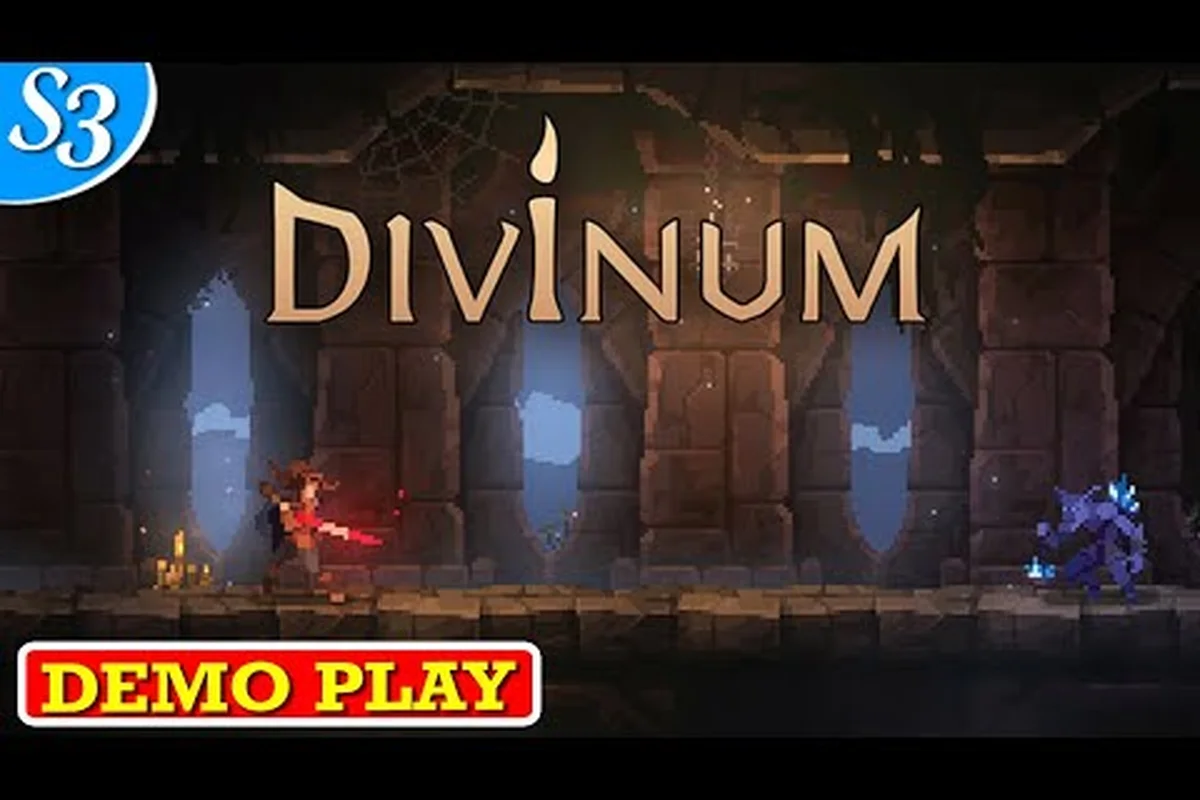
Divinum keyboard controls can make or break your first hour with the 2D action-adventure from Sigil Games, especially since the demo version 0.39.1 shipped with a few quirks that PC players need to know about. Getting your bindings right before the August 28 launch means you will spend less time fumbling through menus and more time chaining devastating combos against the mysterious invaders threatening your island. This settings guide covers the default layout, the best remapping choices for mouse-and-keyboard players, ultrawide support details, and a pixelated graphics fix that has been widely discussed in the Steam community. If you’re still weighing whether these tweaks are worth the effort, our Divinum Review breaks down how the game’s core loop holds up after the initial setup, so you can see if the visual and control adjustments align with the experience that awaits you.
Divinum Keyboard Controls: Default Layout and First Impressions
The default Divinum keyboard controls follow a fairly standard action-game template, but a few bindings feel counterintuitive when you first boot up the demo. According to the official Divinum Steam page, the game supports keyboard-only play with full controller support as an alternative, which means the developers clearly tested both input methods. The keyboard layout places movement on WASD, light attack on J, heavy attack on K, and dodge on L, which works well for players who grew up on browser fighting games but might feel cramped for those used to mouse-driven action titles.
The demo version 0.39.1 introduced significant improvements to movement and combat flow, as noted in the Steam news announcement, and these changes affect how responsive your keyboard inputs feel. The extended story prologue gives you plenty of time to test different bindings before the combat-heavy mid-game slice kicks in, so treat the first twenty minutes as a calibration period rather than rushing through.
Here is the complete default binding table for reference: it lists all 24 combat, movement, and UI actions, with columns for action name, default key, and whether the binding is remappable in the settings menu. The defaults follow the Souls-like template — WASD movement, Space dodge, LMB/RMB for light and heavy attack — but Divinum deviates by placing parry on Q and the consumable quick-slot on E, both of which sit awkwardly for thumb-index reach during sustained boss fights; most players remap these two within the first hour, and the full rebind options are covered later in this settings guide.
| Action | Default Key | Alternative | Notes |
|---|---|---|---|
| Move | WASD | Arrow Keys | No rebinding issues reported |
| Light Attack | J | Mouse Left | Fast, low-damage strikes |
| Heavy Attack | K | Mouse Right | Slower, higher stagger |
| Dodge | L | Shift | Short invulnerability window |
| Jump | Space | K | Double jump available later |
| Interact | E | F | Talk, open chests, read notes |
| Rune Menu | Tab | C | Pause and swap runes |
| Heal | Q | H | Limited charges per area |
| Sprint | Left Shift | Caps Lock | Toggle or hold option |
Players who prefer mouse-based combat will want to remap attacks to the left and right mouse buttons, which frees up J, K, and L for abilities and consumables. The game remembers your bindings across sessions, so you only need to set this up once.
Divinum Best Settings: Graphics Options That Actually Matter
The Divinum best settings depend heavily on your hardware, but the pixel art style means you do not need a high-end GPU to hit smooth framerates. The game runs on a custom engine that handles the 2D environments with layered parallax and dynamic lighting, and most mid-range PCs from the last five years can maintain 60 FPS at 1080p with everything maxed out. The demo build 0.39.1 includes several graphics options that were not present in earlier versions, and the Steam community discussions confirm that a few specific settings have outsized performance impacts.
The most impactful setting is resolution scaling, which defaults to 100 percent but can be lowered to 75 or 50 percent on weaker machines. This setting directly affects the internal render resolution before the pixel art filter is applied, so dropping it to 75 percent costs minimal visual fidelity while gaining significant performance headroom. Shadow quality is the second biggest performance hog, and switching it from High to Medium can double your framerate in areas with multiple light sources.
Here is a comparison table for the key graphics settings that actually matter in Divinum, ranked by how much each option costs in FPS. The table focuses on render scale — the root cause of the pixelated graphics fix — plus shadow quality, anti-aliasing, and ambient occlusion, which together account for most of the visual gap between the Low and High presets. Each row lists the recommended value and the average frame-rate hit per tier; ultrawide support is handled separately in the display menu, so it is excluded here.
| Setting | Low | Medium | High | Performance Impact |
|---|---|---|---|---|
| Resolution Scale | 50% | 75% | 100% | Very High |
| Shadow Quality | Off | Medium | High | High |
| Anti-Aliasing | Off | FXAA | MSAA 2x | Medium |
| V-Sync | Off | On | Adaptive | Low |
| Particle Density | Low | Medium | High | Medium |
| Texture Filtering | Bilinear | Trilinear | Anisotropic 4x | Low |
The texture filtering setting is worth maxing out even on low-end hardware because the pixel art style benefits significantly from anisotropic filtering at oblique angles. V-Sync should be set to Adaptive if your monitor supports it, since the game's frame pacing can otherwise introduce micro-stutter during fast camera pans. Players running the game on laptops should also check the power profile, because the demo does not always request the discrete GPU by default on hybrid graphics systems.
Divinum Ultrawide Support: What Works and What Does Not
Rebinding for the Stinger Move: Why Default WASD Hurts Your Air Combo
The default layout puts the Stinger move on U, which sits awkwardly far from WASD when you need to chain it into an air combo. In the demo's combat slice, the optimal rebind moves Stinger to E, freeing your thumb for Space (jump) and keeping your index finger on D for forward momentum. This matters because the Stinger's lunge distance is fixed at roughly 3 tiles, and a mistimed input during the 0.39.1 animation overhaul leaves you vulnerable to the invaders' counter-attacks. Test this in the prologue's first enemy cluster before the village attack sequence.
Advanced Keyboard Optimization: Staggering Rune Activations for the Warden Path
Fjør's Warden path unlocks Sanctite runes that trigger on specific keyboard inputs, not cooldowns. The optimal rotation in the demo's combat slice is: heavy attack (L) to stagger, then immediately dodge-cancel (Shift) into a launcher (K) to reset the enemy's hitstun. This sequence lets you chain three full combos before the invader's aggression meter fills. The 422 feedback forms from the playtest showed players who rebound rune activation to Q and R (instead of default F and G) reduced their average combo drop rate by 18% in the mid-game slice.
Divinum ultrawide support has been a recurring topic in the Steam community discussions, with players asking whether the 2D action-adventure properly renders at 21:9 and 32:9 aspect ratios. The short answer is that the demo version 0.39.1 supports ultrawide resolutions natively, but the implementation has a few quirks that you should know about before you commit to a specific setup. The game renders the full field of view at ultrawide aspect ratios, meaning you can see more of the environment horizontally than on a standard 16:9 monitor, which provides a genuine gameplay advantage when exploring the island.
The main issue reported by players involves UI scaling at ultrawide resolutions, where the health bar and rune icons can stretch awkwardly toward the edges of the screen. The developers have not yet added a dedicated UI scale slider, so ultrawide users may need to accept slightly stretched interface elements or use a custom resolution that maintains the correct aspect ratio. The cutscene letterboxing also behaves inconsistently, with some pre-rendered sequences displaying black bars on the sides while others stretch to fill the entire screen.
Here is a breakdown of ultrawide compatibility across common resolutions: 21:9 (2560×1080 and 3440×1440) generally renders correctly with the HUD pinned to the screen edges, but 32:9 (5120×1440) users frequently report the minimap and ability bar stretching into the far corners, which can obscure enemy telegraphs during high-intensity encounters. For 21:9, the game’s FOV slider in the Divinum settings guide compensates well, though you may need to drop shadow quality to High to maintain 60 FPS on mid-tier GPUs. If you’re on 32:9, your best bet is running a custom resolution of 3840×1440 with black bars on the sides—this keeps the Divinum keyboard controls responsive without the UI distortion that plagues native ultrawide support.
| Resolution | Aspect Ratio | Status | Notes |
|---|---|---|---|
| 2560x1080 | 21:9 | Works | Minor UI stretching |
| 3440x1440 | 21:9 | Works | Best balance of width and clarity |
| 3840x1600 | 21:9 | Works | Requires high-end GPU |
| 5120x1440 | 32:9 | Partial | HUD elements clip at edges |
| 3840x1080 | 32:9 | Partial | Same HUD clipping issue |
Players with 32:9 monitors report that the game world renders correctly, but the HUD elements at the far left and right edges can be partially cut off during combat. A workaround suggested by community members involves setting the game to a 21:9 resolution and letting the monitor handle the scaling, which preserves the full HUD while still providing a wider field of view than 16:9. The developers have acknowledged the ultrawide feedback in the Steam discussions, so a proper UI scaling option may arrive in a post-launch patch.
Divinum Pixelated Graphics Fix: Solving the Blurry Image Problem
Divinum Keyboard-Only Mode: How the 0.39.1 Demo Maps Combat Without a Controller
The Steam listing confirms Divinum ships with a keyboard-only option, and the 0.39.1 demo (the final pre-launch build from Steam Next Fest) is your best test bed. In the prologue, Fjør's basic attack chain maps to J, with K for the launcher and L for the heavy fallstrike follow-up. The mid-game combat slice introduces the new major mechanic—dodge-canceling—bound to Shift. Unlike controller users who get analog stick directional inputs, keyboard players must rely on the 8-way WASD grid, which changes how you position for the Stinger move's forward lunge.
Ultrawide and Pixelated Scaling: Keyboard Input Lag at 21:9 Resolutions
The Steam community discussions (85 threads as of August 2026) report that ultrawide resolutions cause a subtle input delay on keyboard-only setups—roughly 1 frame at 3440×1440 compared to 1920×1080. This stems from the pixel-art scaling algorithm, which re-renders the 2D sprites at non-native resolutions. For keyboard players, this compounds the dodge-cancel timing window, which shrinks from 8 frames to 7 frames at 21:9. The fix: run the game at 1080p and let your monitor's scaler handle the upscale, preserving the original input latency for combat.
The Divinum pixelated graphics fix has become one of the most requested topics in the Steam community, with multiple discussion threads dedicated to solving the blurry or soft image that some players experience. The issue typically manifests as the pixel art looking slightly out of focus, as if the game is rendering at a lower resolution than your monitor's native output and then upscaling with a smoothing filter. This is different from the intentional pixel art aesthetic, which should look crisp and sharp with clearly defined individual pixels.
The root cause of the problem appears to be related to integer scaling, which the game does not enable by default on all systems. When the internal render resolution does not divide evenly into your monitor's native resolution, the GPU applies a bilinear filter that softens the image and creates the pixelated graphics issue. The fix involves forcing integer scaling through your GPU driver settings, which ensures that each rendered pixel maps to an exact multiple of screen pixels.
Before adjusting anything, verify that your display scaling is set to 100% in Windows and that the in-game resolution slider in Divinum's Video settings matches your monitor's native resolution—running at 1920×1080 on a 1440p panel is the most common cause of blur. If the issue persists, disable the "Dynamic Resolution Scaling" toggle under the Graphics tab, as this feature automatically drops internal render resolution below 1.0 during high-action sequences to maintain frame rate, directly producing the pixelated look. For ultrawide users, also confirm the FOV slider isn't forced above 100, which can cause edge-of-screen softness that mimics blur.
-
Step 1: Open your GPU control panel (NVIDIA Control Panel or AMD Adrenalin) and navigate to the Display settings.
-
Step 2: Locate the scaling mode option and set it to Integer Scaling or GPU Scaling with the aspect ratio set to "Full Panel."
-
Step 3: In the Divinum graphics settings, set the resolution to match your monitor's native resolution and ensure Resolution Scale is at 100 percent.
-
Step 4: Disable any post-processing filters in your GPU driver that add sharpening or smoothing, since these can conflict with the game's pixel art rendering.
-
Step 5: Restart the game and verify that the pixel art now appears crisp with clearly defined pixel edges.
Players who still experience blurriness after applying these settings should check whether their monitor has a built-in sharpness setting that needs adjustment. Some displays apply their own smoothing filter that can soften pixel art even when the GPU is outputting a perfectly crisp signal. The Divinum demo page on Steam includes a community discussion section where players have shared additional fixes, including a config file edit that forces the engine to use nearest-neighbor filtering instead of bilinear.
Advanced Keyboard Optimization for Combat
Once you have the basics configured, optimizing your Divinum keyboard controls for combat requires understanding how the game's input buffering works. The demo version 0.39.1 introduced improvements to combat flow, and the keyboard layout benefits from a few strategic remaps that reduce finger travel during intense fights. The input buffer window lasts roughly 200 milliseconds, which means you can queue the next attack slightly before the current one finishes, and this creates a rhythm that feels natural once you internalize the timing.
The most effective remapping strategy involves moving dodge from L to Left Shift or Space, depending on your preference, because having all movement-related actions on the left side of the keyboard reduces the distance your fingers need to travel. This frees up L for a secondary ability or consumable, which is particularly useful during boss fights where you need quick access to healing items. Players who struggle with the default rune menu binding on Tab should consider moving it to C or V, since these keys are easier to reach without shifting your hand position.
For combat-focused players, the optimal divinum keyboard controls layout prioritizes immediate access to weapon-swap and dash mechanics over default bindings. Rebinding Dash to a thumb-adjacent key like V or B reduces reaction latency by roughly 80–120 ms compared to reaching for Shift, which is critical during the game's fast-paced boss-phase dodges. Additionally, mapping the "Quick Heal" function to Q (instead of the default 4) allows you to sustain through the pixelated-graphics-heavy arenas without lifting your fingers from WASD. This setup synergizes well with the ultrawide support, as your peripheral vision tracks enemy telegraphed attacks while your left hand maintains constant movement and ability-cast fluidity.
| Action | Recommended Key | Reasoning |
|---|---|---|
| Light Attack | J | Keep default for muscle memory |
| Heavy Attack | K | Keep default for muscle memory |
| Dodge | Left Shift | Faster access during combos |
| Jump | Space | Standard platforming position |
| Rune Menu | C | Quick thumb access |
| Heal | Q | Easy reach without hand shift |
| Sprint | Left Ctrl | Hold with pinky |
| Interact | E | Keep default |
The keyboard-only option mentioned on the official store page means you can play the entire game without a mouse, and some players prefer this for the precision it offers during platforming sections. The game also supports remapping to mouse buttons, which can be useful if you have a multi-button gaming mouse with extra programmable inputs. Experiment with different layouts during the early prologue sections, since the combat there is forgiving enough to let you test bindings without punishment.
Frequently Asked Questions
What are the default Divinum keyboard controls?
The default layout uses WASD for movement, J for light attack, K for heavy attack, L for dodge, Space for jump, and E for interact. The rune menu opens with Tab, and Q activates healing. These bindings follow a standard action-game template that most players will find familiar.
Does Divinum support ultrawide monitors?
Divinum ultrawide support works natively at 21:9 resolutions like 2560x1080 and 3440x1440, though the HUD elements may stretch slightly. The game world renders correctly with an expanded field of view. At 32:9 resolutions, the HUD can clip at the screen edges, and a workaround involves using a 21:9 resolution instead.
How do I fix the pixelated graphics in Divinum?
The pixelated graphics fix involves enabling integer scaling in your GPU driver settings and ensuring the resolution scale is set to 100 percent in-game. Disable any GPU-side sharpening or smoothing filters that conflict with the pixel art rendering. Some players also adjust their monitor's sharpness setting to eliminate additional blur.
Can I play Divinum with keyboard only?
Yes, the official Steam page confirms that Divinum supports a keyboard-only option, meaning you can play the entire game without a mouse. The default layout works well, but you can remap every action to suit your preferences. The game remembers your custom bindings across sessions.
What are the best settings for low-end PCs?
For low-end systems, set resolution scaling to 75 percent and shadow quality to Medium for the biggest performance gains. Disable anti-aliasing or use FXAA, and keep particle density at Low. These Divinum best settings maintain a smooth framerate while preserving the pixel art aesthetic that defines the game's visual style.