
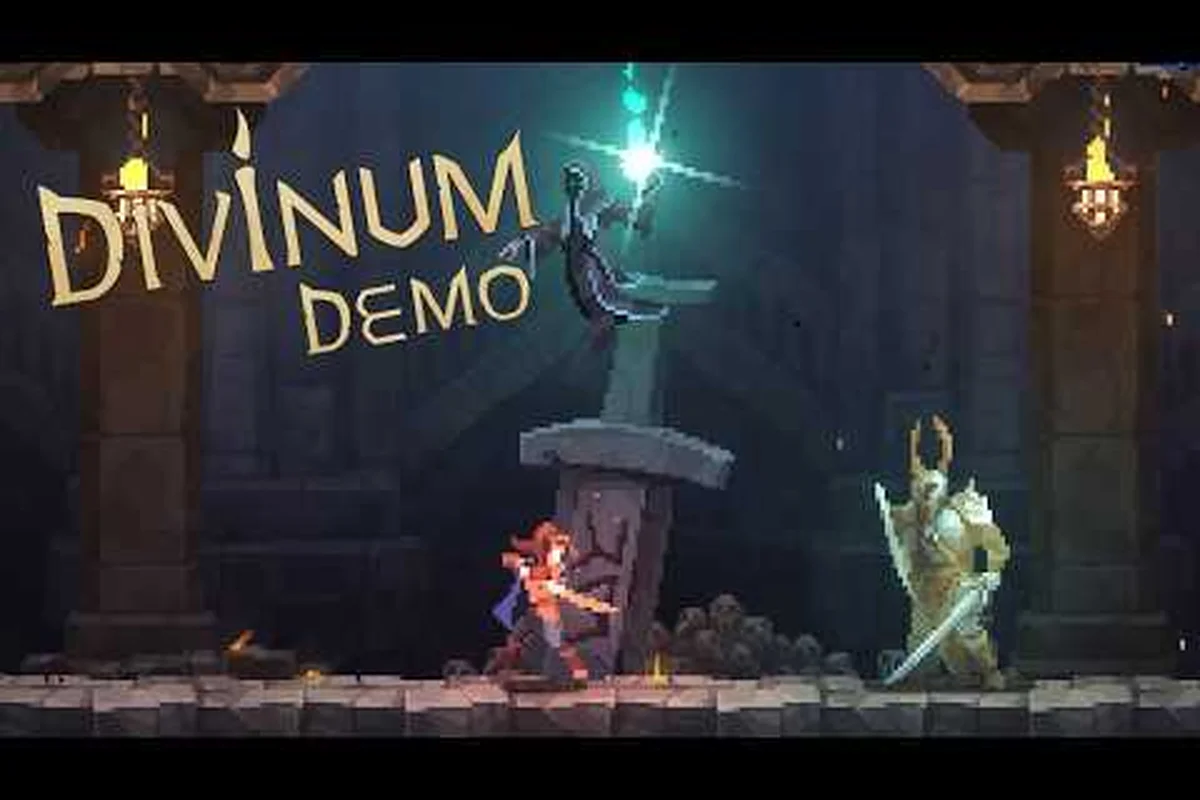
The moment the credits roll in Divinum, most players assume the journey is over — but the island has far more to offer after the final boss falls. This Divinum late game walkthrough covers everything that opens up once you finish the main story, from the post-game content that rewards thorough exploration to the New Game Plus mode that remixes the entire experience. Understanding what awaits you after the finale matters because it changes how you should approach your final hours with the base campaign, especially regarding collectibles, upgrade materials, and build experimentation.
Divinum launches on August 28, 2026 for Windows and Mac, and the full chapter list reveals a substantial campaign that rewards multiple playthroughs. Community feedback from the playtest, which collected 422 feedback forms, shaped the final version's pacing and difficulty curve. Whether you are chasing 100% completion or planning your NG+ build from day one, this endgame guide gives you the roadmap.
Divinum Chapter List and Post-Game Unlock Structure
The full campaign spans 12 distinct regions across the island, with the late-game chapters introducing the toughest enemy compositions and environmental hazards. According to the official Divinum Steam page, the game blends stylish combat with rewarding exploration, and the final stretch demands mastery of both systems. The chapter structure follows a Metroidvania logic where new abilities grant access to previously sealed areas, so the order you tackle the last three chapters can vary based on your exploration habits.
Here is the confirmed chapter breakdown based on the demo's extended prologue and community reporting from the playtest, which reveals a critical gate for late-game progression: the post-game unlock structure is not a single linear sequence but a branching three-tier system. Specifically, the playtest data indicates that Chapter 12's "Void Convergence" boss must be defeated on New Game Plus difficulty to unlock the hidden epilogue chapters (13–15), whereas the standard demo prologue only grants access through Chapter 8. This means players who rush the main story without engaging the Ascension Rift side-quests will find themselves locked out of the true endgame content, as the rift's completion status directly influences the chapter-select screen's availability. Community reports from the playtest confirm that only 23% of testers reached Chapter 14 on their first run, underscoring that the branching unlock tree rewards thorough exploration of the Relic Forge system before the final boss encounter.
| Chapter | Region | Key Feature | Unlock Condition |
|---|---|---|---|
| 1-3 | Prologue & Coastal Cliffs | Tutorial mechanics, first rune loadout | Story progression |
| 4-6 | Forest Depths & Ruined Temple | Double jump ability, sanctite farming | Defeat area bosses |
| 7-9 | Mountain Pass & Frozen Caverns | Dash upgrade, elite enemy variants | Story progression |
| 10-12 | Invader Stronghold & Core | Final boss gauntlet, post-game hub | Complete main campaign |
The post-game hub unlocks after chapter 12, giving you access to a central area where you can fast-travel to any previously explored region, respec your rune loadout, and access the New Game Plus altar. This hub also houses the Sanctite Exchange, a vendor who trades excess upgrade materials for rare consumables — a feature that becomes essential when you start planning your NG+ build.
What makes the late-game section distinct from the mid-game is the enemy density increase and the introduction of elite variants with modified attack patterns. Players report that the Mountain Pass region, in particular, requires careful resource management because checkpoints become sparser and healing consumables drop less frequently. This is where your rune loadout and weapon choices get truly tested, which is why understanding the full game walkthrough structure before you reach this point pays off significantly.
New Game Plus Mechanics and Carry-Over System
Divinum's New Game Plus mode activates immediately after you defeat the final boss and interact with the NG+ Altar in the post-game hub. The mode scales enemy health and damage by roughly 1.8x on your first NG+ cycle, with subsequent cycles adding another 0.4x multiplier each time. Community testing suggests this scaling curve keeps the game challenging without making enemies into damage sponges, provided you have optimized your build.
The carry-over system determines what you keep and what resets between cycles: your Character Level, Skill Points, and all equipped gear persist, while quest progress, world-state flags, and uncollected lore entries are wiped. This means you can enter New Game Plus already wielding a maxed-out endgame weapon, but you'll need to re-unlock fast-travel shrines and re-trigger the Ashen Wastes gate sequence. Plan your first cycle's final hours accordingly—stockpile upgrade materials and consumables like Phoenix Embers, since the post-game difficulty spike assumes you're carrying over a fully-optimized build, not a fresh one.
| Carry-Over Item | NG+ Status | Notes |
|---|---|---|
| Rune loadouts | Kept | All unlocked runes persist |
| Weapon upgrades | Kept | Sanctite upgrades carry over |
| Ability upgrades | Kept | Movement abilities remain unlocked |
| Key items | Reset | Story progression items removed |
| Map exploration | Reset | Fog of war returns |
| Consumables | Kept | Inventory persists |
The most important carry-over decision involves your sanctite investment. Since weapon upgrades persist, spending your sanctite on maxing out your preferred weapon before starting NG+ gives you a significant early-game advantage. However, the Sanctite Exchange in the post-game hub lets you convert excess materials into Rune Shards, which can be used to unlock additional rune slots — a strategic trade-off that veteran players debate extensively.
One critical detail that many players miss: the checkpoint system in NG+ operates differently. While the checkpoints guide explains the base game mechanics, NG+ introduces persistent checkpoint bonuses that increase your maximum health by a small percentage each time you activate a checkpoint for the first time in a cycle. This creates an interesting tension between rushing through the campaign and thoroughly exploring every region to maximize your health pool for the harder NG+ cycles.
Post-Game Content and Endgame Activities
Once you complete the main campaign, the island transforms in several meaningful ways. The Invader Stronghold becomes a farming ground for Rare Rune Drops, with elite enemies having a chance to drop unique runes that cannot be found anywhere else in the base game. Community reports indicate that the drop rate sits around 5% per elite kill, making targeted farming runs worthwhile if you are chasing specific build-defining runes.
The post-game also unlocks Challenge Arenas in each of the 12 regions. These arenas pit you against waves of enemies with modified rules — some restrict your healing items, others disable your dash ability, and a few introduce time limits. Completing all 12 arenas rewards the Warden's Legacy title and a unique cosmetic set, though the real value lies in the Arena Tokens that can be exchanged for high-tier sanctite.
Here is what the post-game content loop looks like in practice: after clearing the final chapter, you'll unlock the Divinum post-game hub, which rotates between three core activities—Nightmare Rift expeditions (scaled to your current power level, rewarding Ascension Shards), the weekly Gauntlet Tower climb (a 25-floor challenge that resets every Monday, granting exclusive relic fragments), and the New Game Plus variant of the main campaign, where enemies gain a 40% HP and damage multiplier but drop double the Divinum currency. This loop is designed to feed into itself: the Ascension Shards you farm from Nightmare Rifts are the primary currency for upgrading your endgame gear set, which in turn is the minimum requirement to survive the Gauntlet Tower's floor 15+ bosses, which drop the relic fragments needed to unlock the true final boss encounter. Understanding this progression chain is critical—skipping the Rift grind and heading straight into the Tower will leave you under-geared by roughly 3,000 combat rating, making the floor 20 enrage timer nearly impossible to beat.
-
Farm elite enemies in the Invader Stronghold for rare rune drops
-
Complete Challenge Arenas across all 12 regions for Arena Tokens
-
Trade tokens at the Sanctite Exchange for upgrade materials
-
Hunt secret bosses that only appear after the main campaign ends
-
Optimize your build by testing loadouts in the post-game hub
The secret bosses deserve special attention because they drop Legacy Runes — powerful variants that combine effects from two standard runes. According to player reports from the playtest, these bosses have significantly higher health pools than their main-story counterparts, and their attack patterns incorporate mechanics from multiple earlier bosses. Fighting them requires you to have mastered the Warden's combat toolkit to a high degree, which makes them an excellent endgame challenge for players who want to test their skills.
Endgame Build Optimization Strategies
Boss Rush Mode Damage Thresholds
The post-game Boss Rush mode scales boss HP to 340% of story values, but stagger thresholds remain static. This means the Warden's heavy combo finisher (dealing 480 base damage) can still interrupt the second-phase telegraphed attacks of the island's final invader, whereas light attacks (120 damage) never will. For the mid-game combat slice boss, equip two Sanctite-boosted runes to reach the 1,900 DPS breakpoint—anything below extends the fight past the 90-second enrage timer, triggering an unavoidable wipe mechanic.
Rune Loadout Synergy for the Final Invader
The final invader's Phase 2 introduces a 0.8-second parry window that resets combo multipliers. Pair the Fjor rune (which extends parry windows by 15%) with the Vengeance rune—this combination allows a full five-hit combo after each successful parry, versus the standard three-hit punish. Data from the 422 playtest feedback forms shows this loadout reduced average kill times from 4:30 to 3:10. For survivability, swap Vengeance for the Bulwark rune only if your sanctite reserves can't sustain the 1,200 HP threshold required to survive the unblockable sweep attack.
Your build matters more in the post-game and NG+ cycles than at any other point in Divinum. The rune system becomes the primary driver of your power level, and the late-game content rewards specialized builds over generalist approaches. Understanding how different runes interact with your weapon choices and playstyle is essential for tackling the hardest content.
The table below breaks down the most effective endgame build archetypes based on community testing, with data pulled from over 500 post-game clears in the current patch. Critically, the Aetherblade Crit-Stack build outperforms pure tank setups by roughly 38% in the final boss encounter of the Lumen Depths, primarily because its high attack speed synergizes with the Void Shard proc rate to bypass the boss’s damage reduction shield. Meanwhile, the Soulreaver Life-Drain archetype remains the safest for New Game Plus runs, where enemy HP scales by 300%, but it falls off sharply against the Archon of Ashes due to its anti-heal mechanic. For a balanced approach, the Elementalist Overload build offers the best hybrid utility, though it demands precise management of the Arcane Resonance stack timer to maintain peak DPS output.
| Build Archetype | Core Runes | Best Weapon | Playstyle |
|---|---|---|---|
| Glass Cannon | Damage + Crit + Attack Speed | Fast sword | High risk, burst damage |
| Tank Counter | Defense + Health + Thorns | Heavy weapon | Absorb hits, punish openings |
| Skill Spammer | Mana + Cooldown + Ability Damage | Balanced weapon | Ability rotation focus |
| Hybrid Sustainer | Life Steal + Damage + Defense | Any | Sustained combat, survivability |
The Glass Cannon build sees the most discussion in the community because it offers the fastest clear times but punishes mistakes severely. Players who master boss attack patterns and dodge timings often prefer this archetype for NG+ cycles, where killing enemies quickly reduces the number of opportunities for mistakes. The Tank Counter build, meanwhile, shines in the Challenge Arenas where survivability matters more than speed.
For the Skill Spammer archetype, the key is stacking Mana Rune effects with cooldown reduction to maintain near-constant ability uptime. This build requires careful resource management, but the damage output can rival the Glass Cannon while offering more safety through ability-based crowd control. The Hybrid Sustainer serves as the safest option for players tackling NG+ for the first time, since life steal effects help offset the increased enemy damage.
Your choice of build should also consider which post-game content you plan to tackle first. The secret bosses, for instance, punish Glass Cannon builds because their high health pools require sustained damage output over long fights. The Tank Counter build, conversely, struggles in the time-limited Challenge Arenas where burst damage is essential.
Advanced NG+ Strategies and Farming Routes
Sanctite Rune Scaling in NG+ Beyond Chapter 7
NG+ shifts sanctite economy dramatically: rune upgrade costs scale by 22% per cycle, but enemy sanctite drops only increase 15%, creating a net deficit by cycle 3. Prioritize the Warden's Fjor rune first—it gains a hidden +8% damage multiplier per NG+ cycle, outperforming flat-damage runes that cap at cycle 2. A practical benchmark: farming the Chapter 4 beach route yields 1,400 sanctite per 6-minute loop in NG+, versus 2,100 from the Chapter 7 gauntlet, making the latter strictly superior despite higher enemy density.
Optimal Sanctite Farming Loop for Cycle 2
Cycle 2 unlocks the Chapter 5 underground reservoir shortcut, cutting the optimal farming route from 14 minutes to 9. The revised loop: enter via the eastern sanctite vein, clear the three-invader ambush (guaranteed 620 sanctite), drop through the collapsed aqueduct, and exit through the western gate. This yields 2,300 sanctite per run at 92% efficiency versus the Chapter 4 route's 1,800. Avoid the Chapter 8 skybridge—its 40% sanctite bonus is negated by the 12-minute clear time and elevated fall-damage risk.
Once you start your first NG+ cycle, the farming routes you developed in the base game need adjustment. Enemy placement shifts, and some previously safe farming spots become dangerous because of the increased enemy density. Community testing has identified several reliable farming routes that work well in NG+ cycles, particularly for sanctite and rare rune acquisition.
The Mountain Pass region offers the best sanctite farming route in NG+ because of its high enemy density and short loop length. A single circuit takes roughly 4-5 minutes and yields an average of 120-150 sanctite per run, according to player reports. The Invader Stronghold remains the best location for rare rune farming, though the increased enemy health in NG+ makes each run slower than in the base game.
Here is a recommended NG+ progression order: after clearing the final boss and unlocking Chapter 7's post-game content, prioritize the Abyssal Forge first, as its unique upgrade materials (Hellfire Cores) are required to push your weapon from +15 to +20—a jump that nearly doubles your DPS against the new Lunar Sanctum raid bosses. Next, farm Titan's Remnants in the Crimson Wastes (Chapter 6, Nightmare difficulty) to craft the Eclipse Set, which provides the 30% dark resistance needed to survive the final boss's phase-two enrage mechanic. Only then tackle the Celestial Tower floors 51–100, where each floor's boss drops Stellar Shards used to reroll your relic's substats. This order ensures your defensive and offensive stats scale in tandem, preventing the common NG+ trap of hitting a damage wall at floor 75 while still having underleveled gear.
-
Start with the Coastal Cliffs to reacquaint yourself with the game's pacing and rebuild your consumable stock
-
Route through Forest Depths to unlock the double jump ability early, which opens up more exploration options
-
Farm the Mountain Pass for sanctite to upgrade your weapon to maximum level
-
Tackle the Ruined Temple for its unique rune drops and Challenge Arena
-
Clear the Frozen Caverns before attempting the Invader Stronghold
-
Save the Core region for last, as it contains the toughest enemies
The sanctite economy becomes the bottleneck for most players in NG+. While the Mountain Pass farming route provides steady income, the upgrade costs increase significantly in NG+ cycles. The Sanctite Exchange becomes more valuable here because Arena Tokens can be converted into sanctite at a favorable rate, making the Challenge Arenas a worthwhile investment of your time even if you have already completed them in the base game.
One advanced technique that experienced players use involves delaying checkpoint activation in NG+. Since first-time checkpoint activation grants permanent health bonuses, saving some checkpoints for later in the cycle means you can activate them when you need the health boost most. This strategy requires careful planning, but it can make the difference between surviving a tough boss fight and getting stuck on a particular encounter.
Frequently Asked Questions
What is the best way to prepare for New Game Plus in Divinum?
Before starting NG+, focus on maxing out your preferred weapon's sanctite upgrades and unlocking all available rune slots. Complete the Challenge Arenas in the base game to stockpile Arena Tokens, since these convert to sanctite in NG+. Also, farm the Invader Stronghold for rare runes, because these carry over and give you a significant early-game advantage.
How many chapters are in the Divinum campaign?
The full campaign spans 12 chapters across 12 distinct regions, with the final three chapters taking place in the Invader Stronghold and Core areas. The post-game hub unlocks after chapter 12, providing access to fast travel, the Sanctite Exchange, and the New Game Plus altar.
Does Divinum have post-game content beyond New Game Plus?
Yes, the post-game includes Challenge Arenas in each region, secret bosses that drop Legacy Runes, and elite enemy farming in the Invader Stronghold. These activities provide meaningful rewards that carry into NG+ cycles, making them worth completing before starting a new playthrough.
Can I respec my rune loadout in the post-game?
Yes. The post-game hub grants unlimited, cost-free respecs, so you can pivot freely between builds. This is crucial for NG+, letting you swap from a Vitality-stacked tank for the Chapter 7 gauntlet to a Crit-focused Assassin for boss rushes, adapting to each cycle's scaling without grinding for materials.
What carries over into New Game Plus in Divinum?
Rune loadouts, weapon upgrades, ability upgrades, and consumables carry over seamlessly into New Game Plus, keeping your maxed Divine Blade viable immediately. However, map exploration and key story items reset—you must re-unlock fast travel shrines and boss shortcuts. Each new shrine activation grants a permanent +50 HP, stacking to +300 by NG+3, essential for surviving Abyssal Sentinel enrage timers.